

The Blacksmith's Journal · The Material
Why Chefs Reach for Carbon Steel
The practical reasons, and what it asks of you in return.
Look at the burners in a busy kitchen and you'll usually spot them: dark, well-worn steel pans that have cooked more meals than anyone could count. Carbon steel has been standard equipment in professional kitchens, especially in the French tradition, for well over a century. Chefs aren't sentimental about it. When a pan gets picked up a couple hundred times a night, its weight and how it handles heat stop being abstract questions.
Light Enough to Work, Heavy Enough to Sear
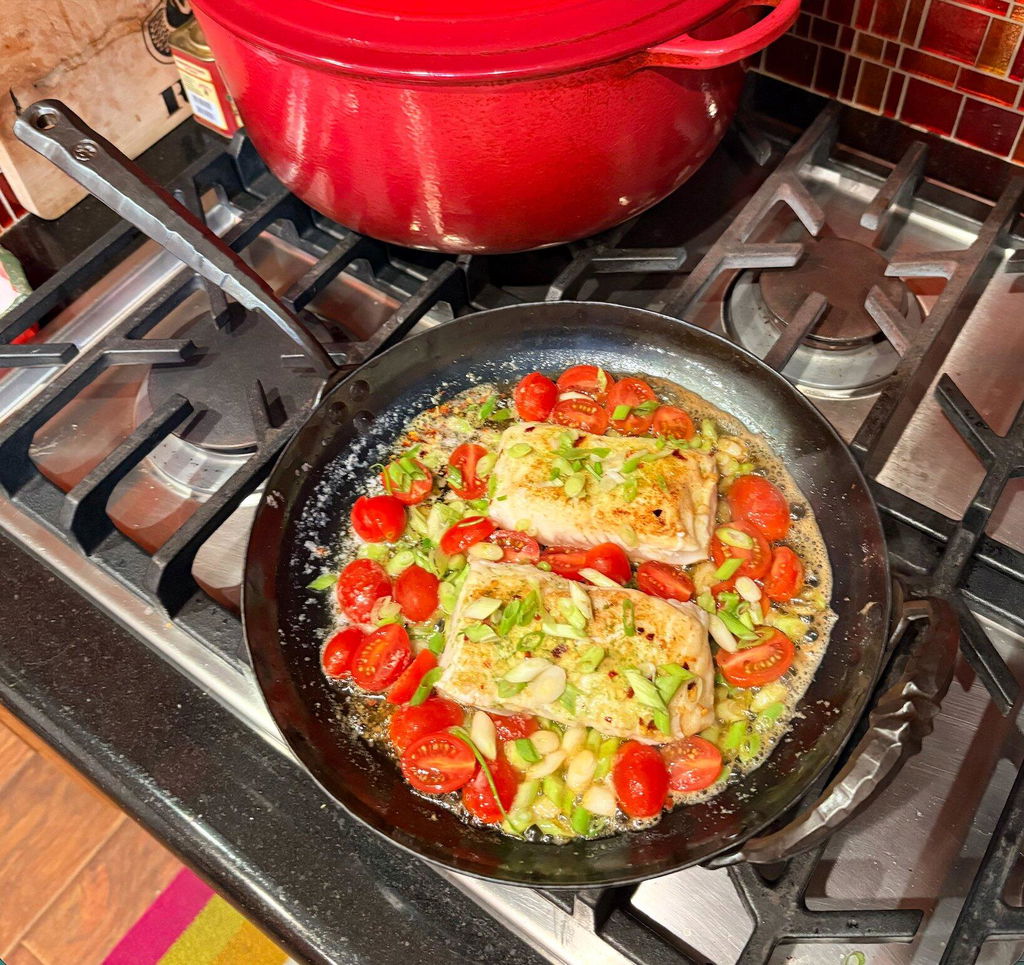
Carbon steel runs roughly a third lighter than cast iron at the same size. That sounds like a small thing until the third omelet flip, or until you're moving a full pan from burner to oven with one hand. It still holds real heat across the whole surface, which is where those golden crusts come from: fish skin that crisps instead of steams, steak that caramelizes instead of grays.
It Listens to the Burner
Cast iron holds heat well, but it's slow to respond in either direction, which is fine until you need the pan to cool off in a hurry. Carbon steel heats fast when you raise the flame and cools fast when you lower it. That responsiveness is the single biggest reason line cooks trust the material.
The Surface That Earns Itself
Like cast iron, carbon steel builds its slick surface through seasoning: thin layers of oil polymerized onto the metal, one cook at a time. The difference is there's no factory coating with an expiration date. Nothing to chip, peel, or quietly wear out. No added PFAS. Just carbon steel. A year in, eggs slide. The pan doesn't wear out with use. It improves, which is rare in anything you buy once.
In Fairness
What It Asks of You
We'd rather tell you up front. Carbon steel rusts if you leave it wet. Long tomato braises will strip seasoning you'll then rebuild. And the first weeks ask a little patience while the surface establishes. None of this is hard. It's a two-minute habit: cook, rinse hot, dry, wipe of oil. The Seasoning & Care Guide covers all of it.
One Pan, Most Jobs
Morning eggs, a weeknight stir-fry, a Sunday steak, cornbread. A single well-kept carbon steel pan covers most of what a cabinet full of specialized cookware promises. Fewer things, used more often.
From Our Shop
Our Sonora pans are forged and finished in Santa Barbara: carbon steel bodies shaped in our shop, hand-forged handles, made by a small team that also builds gates and railings meant to outlast the buildings they're bolted to. Across 400+ reviews, 91% land at five stars, and the phrase that keeps coming back is some version of "the eggs just slide."
Find yours: The Sonora Collection
5 comments
Hello there! I have all of your pans and the 11” never leaves my range top. Awesome pan.
Wish list: I would love a wok – the high sides would be welcome for stir fries which we frequently make. Any plans along those lines?
I’d be first in line!
Thanks!
Ya viene curada desde el primer día o hay que curarla a altas temperaturas? Se puede lavar después de cocinar pescado? Gracias
Se puede usar desde el primer día sin tener que curarla, Hay que curarla antes de usarla por primera vez? Se puede lavar con agua y un poco de jabón después de cocinar pescado? Gracias
Se puede usar desde el primer día sin tener que curarla, Hay que curarla antes de usarla por primera vez? Se puede lavar con agua y un poco de jabón después de cocinar pescado? Gracias
I’m a local Food TV Producer – love to come for a tour