

From the Forge
Carbon Steel Pan
Seasoning & Care Guide
✦
Seasoning is oil baked into steel. Cook with it and it only gets better.
Santa Barbara Forge · The Blacksmith's Journal
Carbon steel pans build their nonstick surface through seasoning, and every meal you cook adds to it. At Santa Barbara Forge, we pre-season our pans with coconut oil so they are ready to cook the day they arrive. Knowing how to maintain and build on that seasoning is what turns a good pan into one you never want to put away.
Watch: Seasoning at the Forge
✦
Understanding Carbon Steel Seasoning
Seasoning creates a natural, protective coating through polymerization: heating oil beyond its smoke point until it bonds with the metal surface. Each layer adds protection that prevents rust, reduces sticking, and improves with time and use.
Carbon steel offers distinct advantages over cast iron. It is lighter, heats more quickly, and responds better to temperature changes, making it ideal for searing, stir-frying, and professional-style cooking.
A Note on Heat
Seasoning involves high heat and hot oil. Use oven mitts, keep the kitchen ventilated, and never leave a heated pan unattended.
Getting Started with Your Pre-Seasoned Pan
Your Santa Barbara Forge pan arrives ready to cook, but the first few uses are the foundation of a strong seasoning:
- Use generous amounts of oil during your first cooking sessions
- Cook dry or high-fat foods first. Hold off on acidic ingredients like tomatoes or vinegar until the seasoning is well established
- Expect some initial sticking. This is normal and improves with every use
Our Seasoning Method
When you want to build seasoning faster, this is the method we use at the forge. All it takes is a stovetop, oil, and a few minutes.
What You Need
- A high smoke point oil (grapeseed, canola, or plain vegetable oil)
- A paper towel or bar rag
- Heat-resistant gloves or a dry towel for the handle
The Process
- Heat the pan on the stove over medium-high until it is good and hot
- Apply a thin layer of oil to the surface with a paper towel or bar rag. The pan should look nearly dry, not greasy
- Keep heating until the oil smokes and the surface darkens
- Let the pan cool completely. Repeat if you want to build additional layers
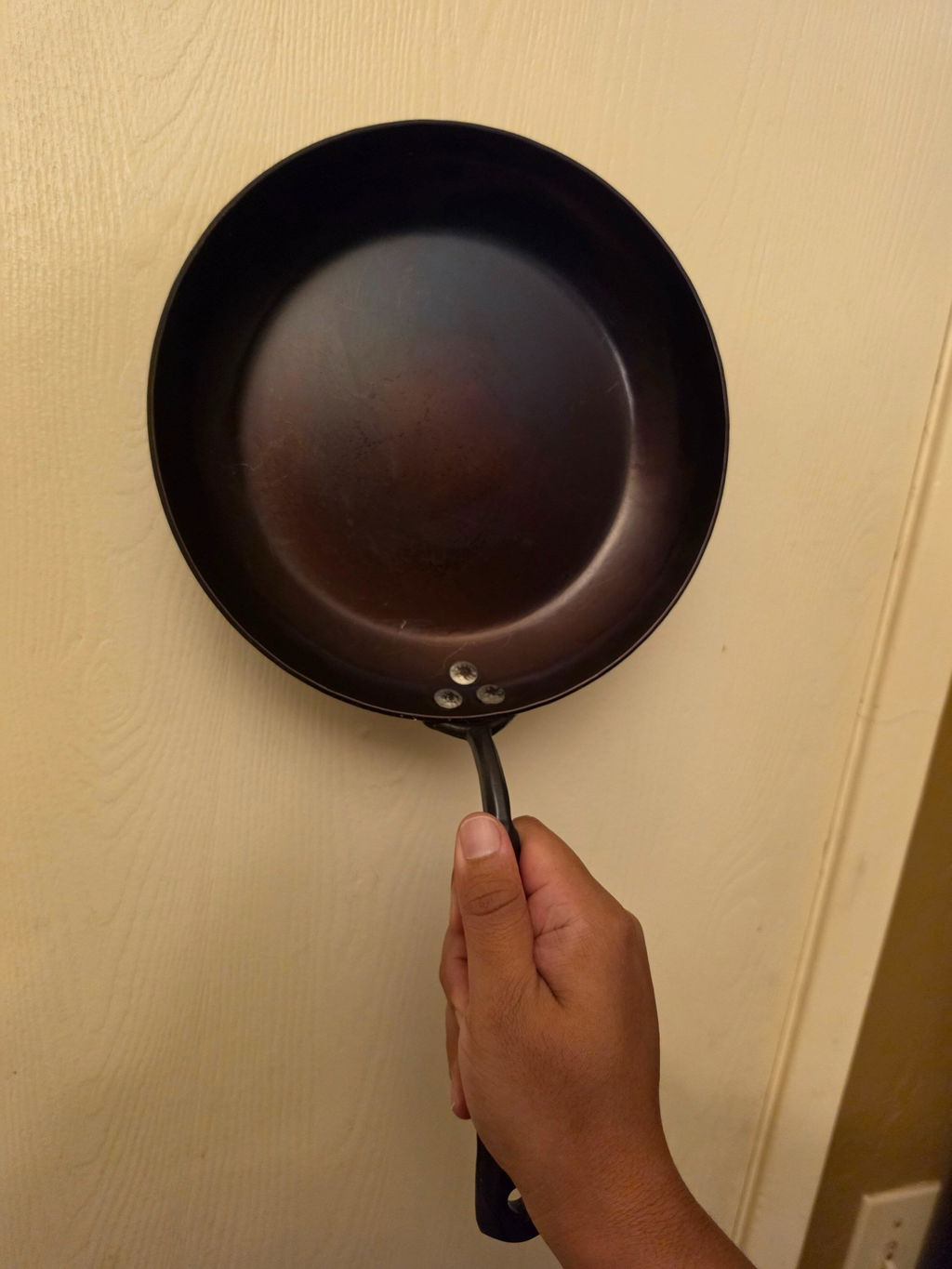
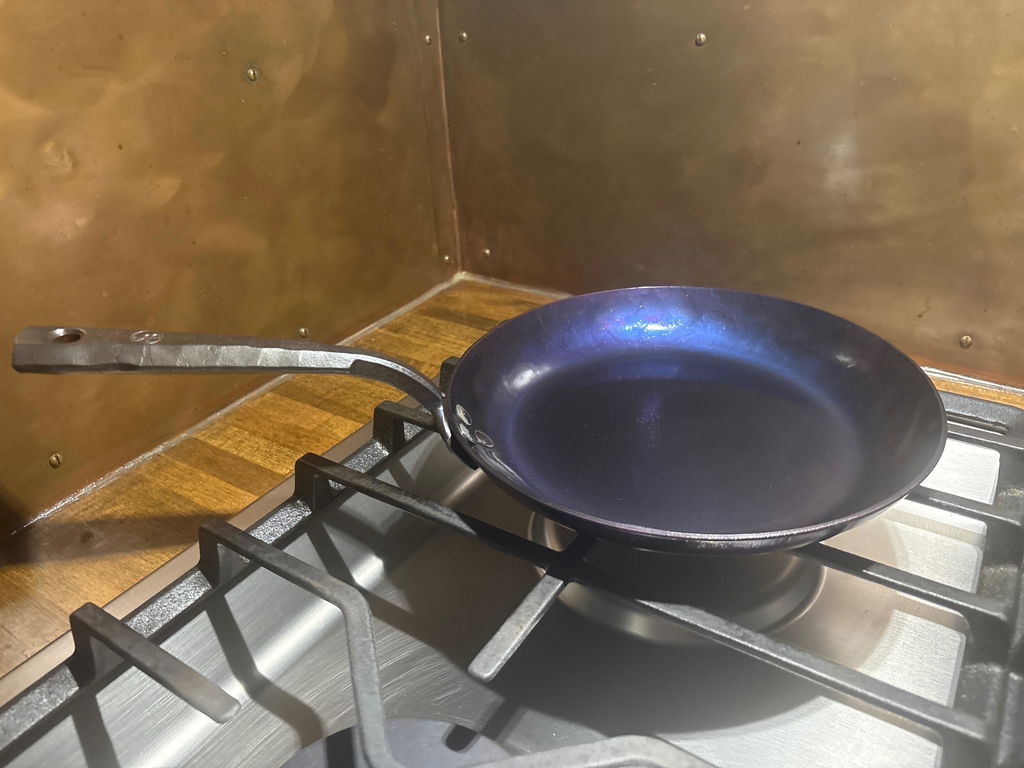
A blotchy, uneven look is normal at first. The color evens out and deepens with regular cooking.
Daily Care and Cleaning
Most cleanups take less than a minute. Run the pan under hot water while it is still warm and scrub with a bristle brush. That is all it usually needs.
- Wipe clean with a paper towel after cooking when you can
- Avoid soap and heavy abrasives like chainmail until your seasoning is thick and well established
- Dry the pan fully and apply a light coat of oil before storing it
Troubleshooting
Food sticking: Your seasoning is still building. Use a little more oil and keep cooking. Seasoning improves with time, not tricks.
Stuck-on residue: Add a little water, simmer briefly, and lift the debris with a wooden spatula.
Blotchy appearance: Normal for young seasoning. It evens out with continued use.
Rust: Scrub the spot out with steel wool, dry thoroughly, and re-season the area using the method above. The pan comes back every time.
✦
A Pan That Gets Better Every Time You Cook
Seasoning is not maintenance. It is the pan becoming yours. Every sear and every stir-fry adds another layer that no coating can match, on a pan forged and finished in Santa Barbara to be passed down.
Pre-seasoned and ready to cook. Made by a small crew in Santa Barbara.
6 comments
Used my new roaster last night. Cleaned with a sponge and water only… the floor is “stainless steel silver” now…do I just need to keep cooking on it for it do even out back to “dark”?
Can these be used on a glass top range?
Thanks for schlepping all your supplies to Terra Madre! Spectacular craftsmanship
My son would love to come in with his 8 year old for a field trip and purchase a pan.he is local,is that possible?
Yes it’s normal. Especially with bacon on a new seasoning. Try putting the bacon in a COLD pan next time then heat it up. Also you’ll have better luck allowing food to get to room temp before you cook
Purchased the small fry pan. Love it. Problem: Seasoned it in oven per directions. Cooked some bacon on it this morning. Brown fond on pan so used a soft bristle and plain water to remove it but it took a lot of the seasoning off the pan to bare metal. Reseasoned with high smoke point oil. Hopefully I can build it back up. Is this normal?